
Industries & Applications

Start from the operating context

Use the application to identify the optical function, environment and information needed for product selection. These routes do not claim customer use, qualification or application-specific performance.

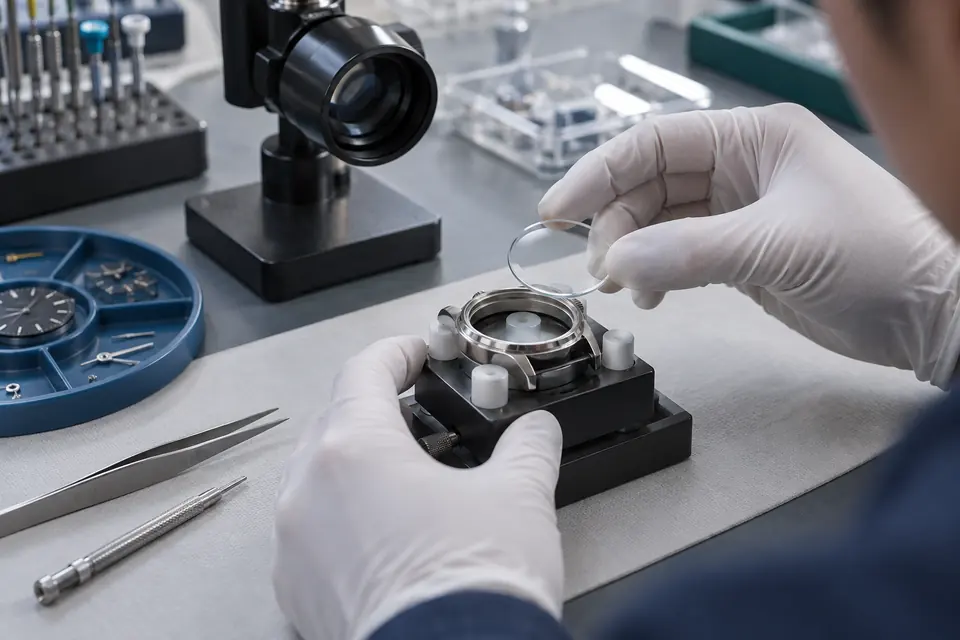
AI-approved illustrative watch-crystal assembly and inspection context
APPLICATION OVERVIEW

Watch Components

Watch-component sourcing begins with crystal profile, case interface, cosmetic requirements and the drawing or sample used for review.

What typically matters: Geometry, edge/profile definition, surface appearance, case fit and inspection criteria.

Relevant product families

Material starting points

Explore this RFQ route →
HOW TO START

Translate the application into selection inputs

  1. Define the optical function and operating context.
  2. Identify the component family closest to the light path or protection need.
  3. Add known wavelength, geometry, environment and mounting information.
  4. Attach the current drawing or sample reference where available.
PRODUCT FAMILIES

Continue by component type

MATERIAL CONTEXT

Continue by material

Use the material directory when the substrate is known or when wavelength and environment narrow the review.

Open material directory →
RELATED RESOURCE

Prepare the specification inputs

Use the RFQ checklist to separate known requirements from items that still need technical confirmation.

Open the RFQ checklist →

Tell us what you are sourcing.

A product name, a specification or an application is a starting point.

Request a Quote