
Textured Glass Illumination Lenses
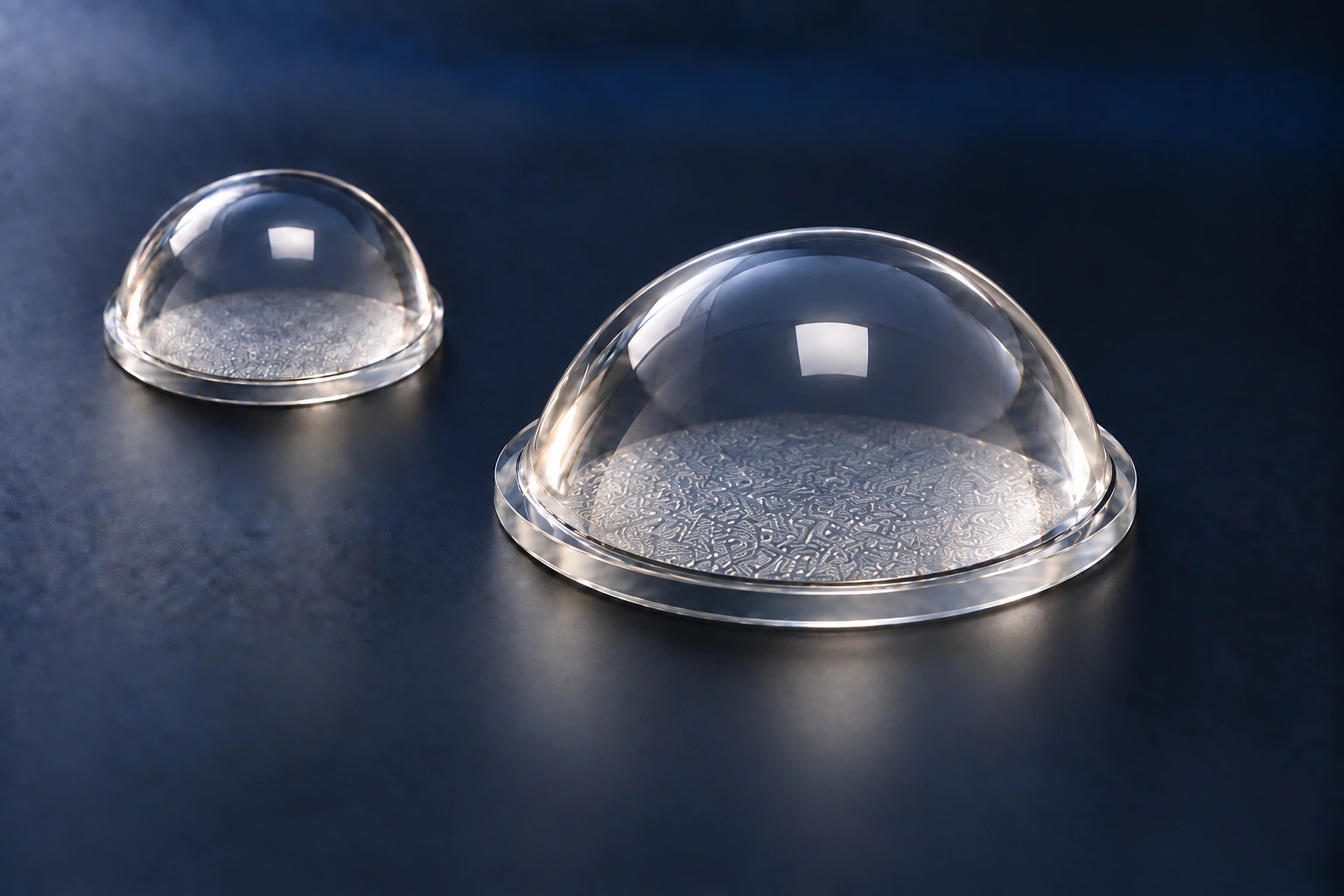
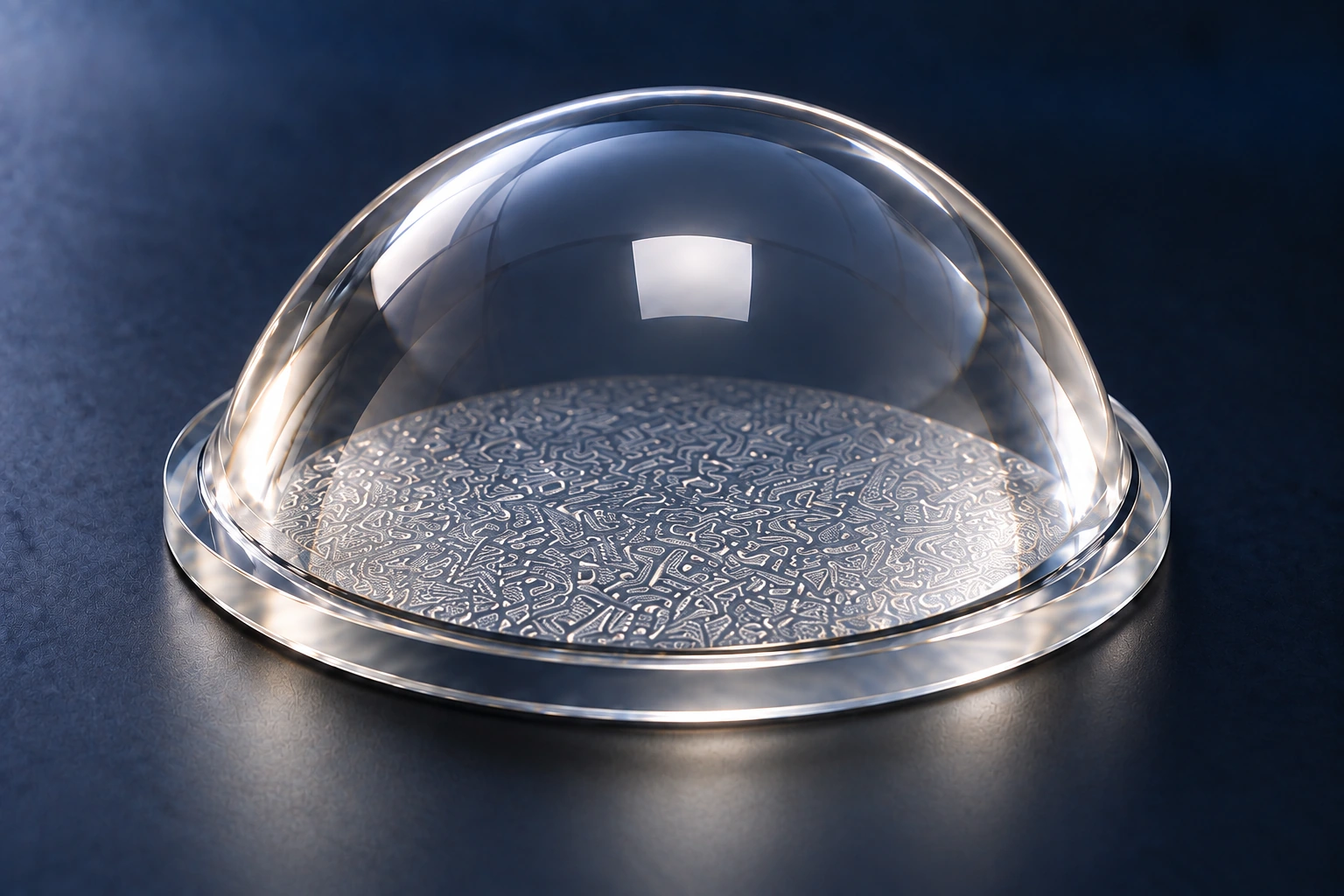
A textured glass illumination lens is a convex glass lens with a textured (non-polished) surface, typically on the flat side, used in LED and lighting systems to soften the visible source image and smooth the beam edge.
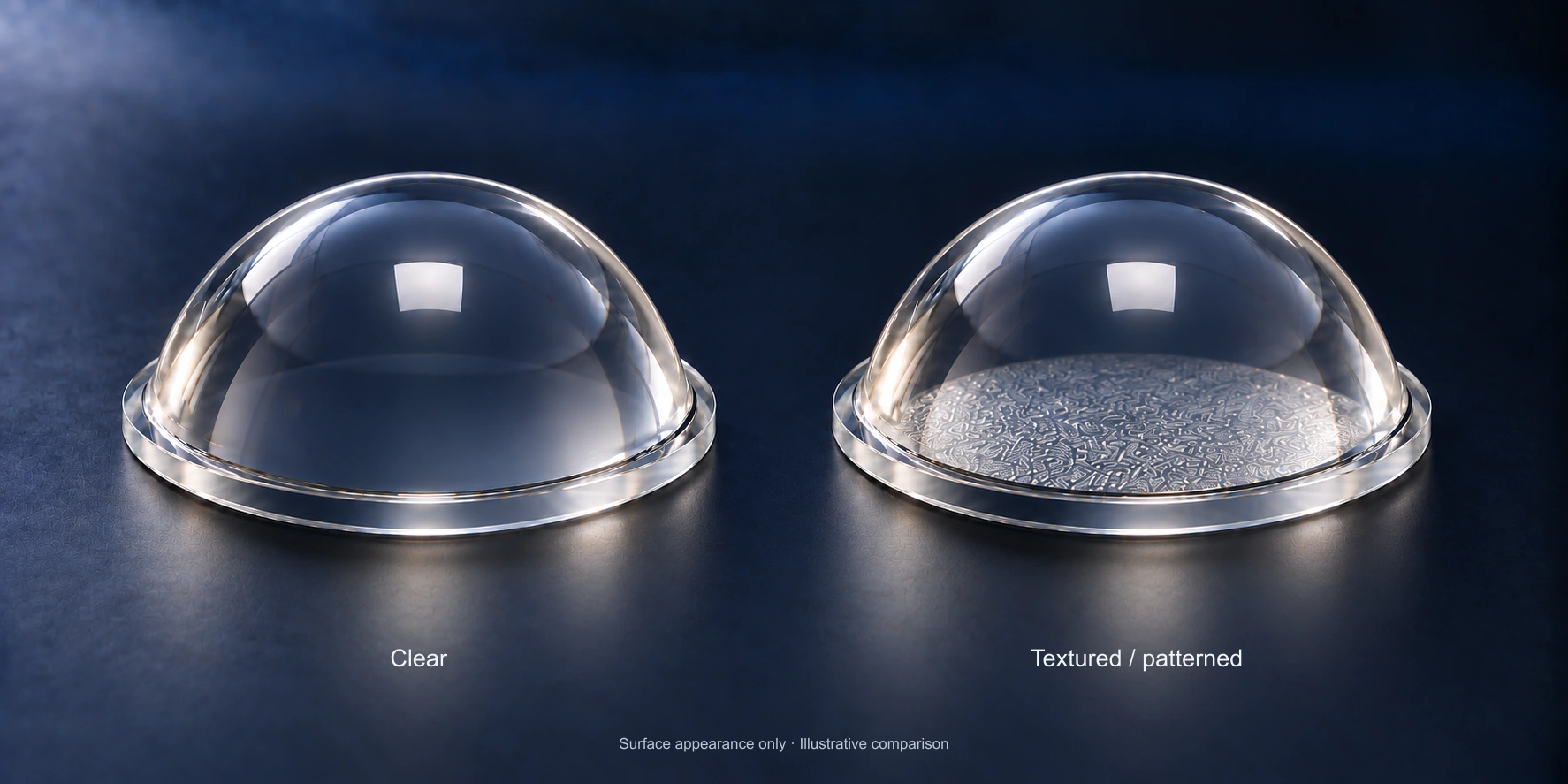
Similar components are also called diffuse or textured-surface condenser lenses. Available in spherical and aspheric versions, flanged or non-flanged, in clear-paired and texture-paired variants.
Key facts
| Form | Plano-convex, spherical or aspheric |
|---|---|
| Surfaces | Curved front (clear); flat back - clear, textured, or frosted on selected models |
| Size range | Existing tooling spans roughly 15 mm to 108 mm outer diameter across the full geometry set |
| Supply mode | Existing tooling (made to order) for cataloged sizes; build-to-print for custom texture or geometry |
FAQ
What makes a lens "textured" rather than clear?
A textured lens has a non-polished, matte or structured surface - typically on the flat back face - instead of a smooth optical polish. The same base geometry is usually available in a clear version.
What is a textured lens typically used for?
It is typically used to soften the visible image of the LED source and smooth the beam edge. This is a typical use, not a measured optical result we publish numbers for.
Are all Dongqiao glass illumination lenses textured?
No. Most of our catalog geometries are clear. Textured and frosted surface options exist on selected models and are called out explicitly in the catalog.
Is a textured lens the same as a frosted lens?
We use "textured" for a structured mold-finish surface and "frosted" for a separate frosting process on selected models. Exact process names are being confirmed with our supplier.
Can I get a textured version of an aspheric or flanged lens?
Yes - texture is a surface option that can apply to spherical, aspheric, and flanged plano-convex geometries. Tell us which base geometry you need in the RFQ.
When should I use a diffuser or silicone optic instead?
If you need a verified, measured diffusion or beam-shaping result, a purpose-built diffuser or molded silicone/plastic optic may be a better fit than a glass texture.
Tell us what you are sourcing.
A product name, a specification or an application is a starting point.