
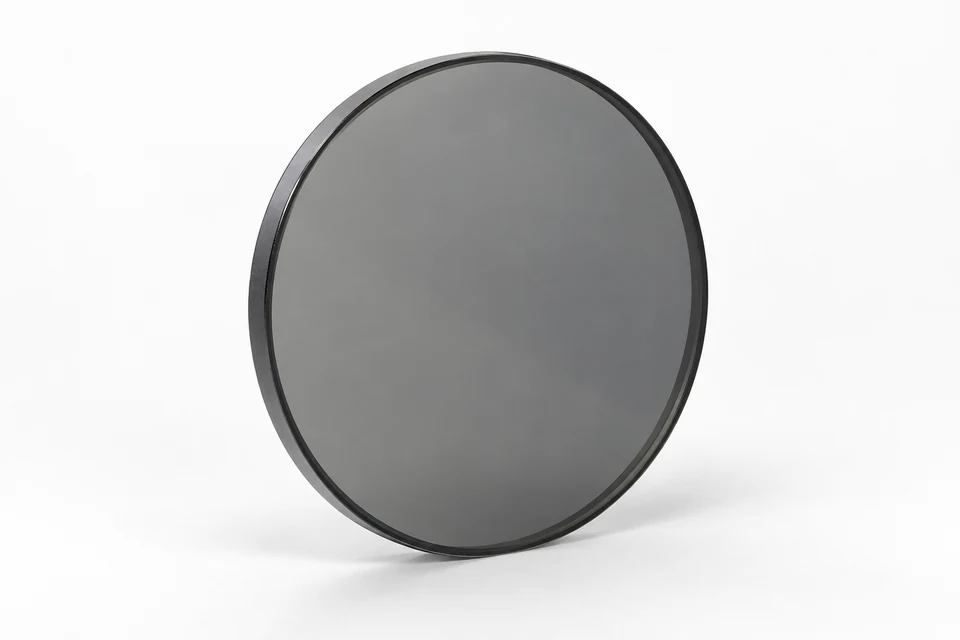
Polarizing Filters
A linear polarizing filter that transmits light of one polarization orientation, used to control glare and surface reflection in machine-vision and industrial optical setups.
Share requirements, quantities and a drawing if available. Specifications and supply terms require confirmation.
Overview
A linear polarizing filter is built from a laminated polarizing film (rather than a thin-film interference coating), which lets it selectively transmit light aligned to one polarization axis while blocking the perpendicular orientation. This lamination-based construction is what machine-vision integrators use to cut glare, control specular reflection off metal or glass parts, and improve contrast in industrial imaging setups — a real, well-documented application distinct from photography-oriented polarizer marketing. Procurement review should center on selecting polarization behavior for a defined wavelength and incidence geometry.
Key Selection Points
- Laminated-film construction, not a precision thin-film interference coating — a different, generally more accessible sourcing model than Bandpass/Dichroic filters
- Used to control glare and specular reflection in machine-vision and industrial imaging setups
Applications
Polarizing filters are used in machine-vision camera systems to reduce glare and specular reflection off metal, glass and wet surfaces, and more broadly in industrial optical setups where controlling one polarization orientation improves contrast or signal quality.
Spectral Performance
This module explains which spectral variables must be defined before measured performance can be reviewed. For Polarizing Filters, the module focuses on selecting polarization behavior for a defined wavelength and incidence geometry.
- Review measured performance against supplier or test-lab data tied to the exact configuration.
- Record wavelength region, angle of incidence and polarization with the measurement context.
- Confirm transmission, reflectance and blocking requirements against approved evidence for the selected configuration.
- Product-specific review: connect polarization state with angle of incidence and document the trade-off against a neutral-density or bandpass filter.
Prepare a product-specific enquiry
Include the requirements you know and identify any points that need confirmation.
| RFQ input | What to provide |
|---|---|
| Input 1 | Procurement objective for Polarizing Filters: selecting polarization behavior for a defined wavelength and incidence geometry. |
| Input 2 | Lock polarization state before requesting a decision on wavelength band. |
| Input 3 | Describe angle of incidence and the mating or operating condition for extinction or transmission acceptance method. |
| Input 4 | Do not omit this product-specific point: state source polarization, wavelength, incidence angle and measurement basis; final performance is confirmed for the selected configuration during quotation. |
| Input 5 | Include quantity and project phase; MOQ, stock and lead time are confirmed during quotation. |
| Input 6 | Identify drawing revision, critical notes and evidence needed at acceptance. |
Frequently Asked Questions
How is a polarizing filter different from a bandpass or dichroic filter?
A polarizing filter selects light by polarization orientation using a laminated film; bandpass and dichroic filters select light by wavelength using a precision thin-film coating. They solve different problems and are not interchangeable.
Can I get a custom-cut polarizing filter?
Polarizing Filters requires this decision to be tied to polarization state and wavelength band. Share your drawing or exact dimensions through the RFQ form and we will confirm feasibility.
Which specification should be fixed first for Polarizing Filters?
Begin with polarization state. It determines how wavelength band and angle of incidence should be evaluated before the mechanical details are finalized.
When is Polarizing Filters a better fit than a neutral-density or bandpass filter?
Choose between them by testing the requirement for selecting polarization behavior for a defined wavelength and incidence geometry. If that requirement is absent, the comparison product may provide a simpler procurement path.
What should an RFQ for Polarizing Filters include?
State source polarization, wavelength, incidence angle and measurement basis; final performance is confirmed for the selected configuration during quotation. Also include quantity, drawing revision and the required acceptance evidence. Final availability is confirmed during quotation.
Related Products & Resources
Explore Related Resources
Tell us what you are sourcing.
A product name, a specification or an application is a starting point.