
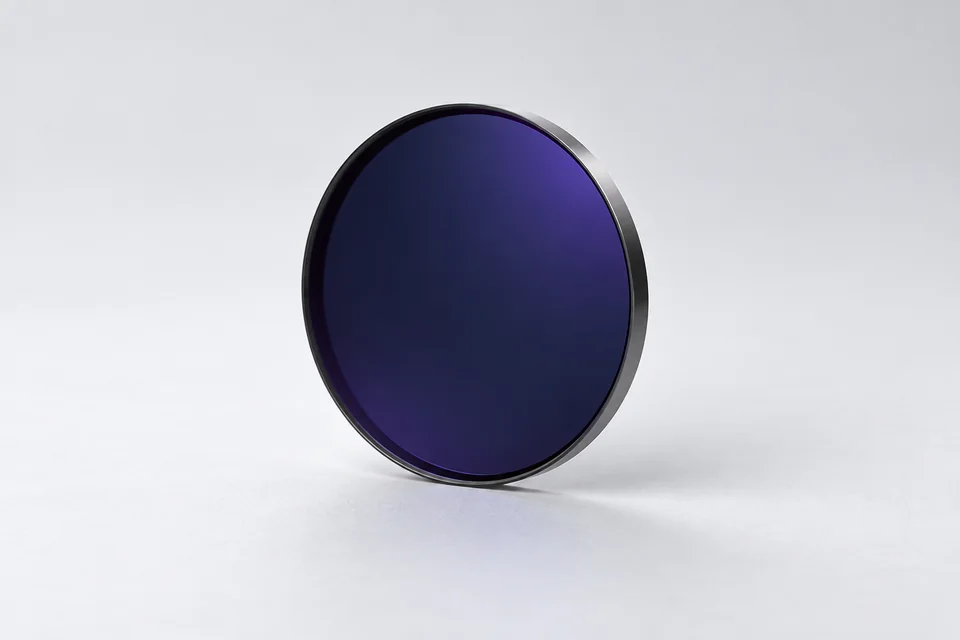
Bandpass Filters
A thin-film interference filter that transmits a defined wavelength band and blocks light outside it, used for spectral wavelength selection.
Share requirements, quantities and a drawing if available. Specifications and supply terms require confirmation.
Overview
A bandpass filter uses a precision multilayer thin-film coating to transmit only a defined wavelength band — set by its center wavelength and bandwidth (FWHM) — while blocking light outside that range. This is the core wavelength-selection tool in spectroscopy, fluorescence imaging and machine-vision systems that need to isolate one spectral region. Procurement review should center on passing a defined spectral band while rejecting adjacent wavelengths under the intended AOI.
Key Selection Points
- Selects a defined wavelength band by center wavelength and bandwidth, distinct from longpass/shortpass filters which use a single cutoff
- Standard tool for spectroscopy, fluorescence and machine-vision wavelength isolation
Applications
Bandpass filters are used in spectroscopy instruments, fluorescence microscopy, machine-vision systems and laser-line isolation setups wherever only one specific wavelength band needs to reach a detector or camera.
Spectral Performance
This module explains which spectral variables must be defined before measured performance can be reviewed. For Bandpass Filters, the module focuses on passing a defined spectral band while rejecting adjacent wavelengths under the intended AOI.
- Review measured performance against supplier or test-lab data tied to the exact configuration.
- Record wavelength region, angle of incidence and polarization with the measurement context.
- Confirm transmission, reflectance and blocking requirements against approved evidence for the selected configuration.
- Product-specific review: connect center wavelength with angle of incidence and document the trade-off against a longpass or shortpass filter.
Prepare a product-specific enquiry
Include the requirements you know and identify any points that need confirmation.
| RFQ input | What to provide |
|---|---|
| Input 1 | Use case for Bandpass Filters: document passing a defined spectral band while rejecting adjacent wavelengths under the intended AOI. |
| Input 2 | First decision pair: center wavelength versus FWHM or passband edges. |
| Input 3 | Integration pair: angle of incidence together with out-of-band blocking region. |
| Input 4 | RFQ-specific instruction: provide CWL, FWHM, AOI, polarization and the full blocking interval. |
| Input 5 | Add the requested quantity and prototype or production stage. |
| Input 6 | Attach controlled drawings and identify the inspection or spectral evidence the buyer expects. |
Frequently Asked Questions
What is the difference between a bandpass filter and a longpass or shortpass filter?
A bandpass filter transmits a defined band between two edges (a center wavelength and bandwidth); a longpass filter transmits everything above one cutoff wavelength, and a shortpass filter transmits everything below one cutoff. They solve different filtering problems.
Can you supply a custom center wavelength?
Share your target center wavelength and bandwidth through the RFQ form and we will confirm feasibility once a coating source is confirmed.
Which specification should be fixed first for Bandpass Filters?
Begin with center wavelength. It determines how FWHM or passband edges and angle of incidence should be evaluated before the mechanical details are finalized.
When is Bandpass Filters a better fit than a longpass or shortpass filter?
Choose between them by testing the requirement for passing a defined spectral band while rejecting adjacent wavelengths under the intended AOI. If that requirement is absent, the comparison product may provide a simpler procurement path.
What should an RFQ for Bandpass Filters include?
Provide CWL, FWHM, AOI, polarization and the full blocking interval. Also include quantity, drawing revision and the required acceptance evidence. Final availability is confirmed during quotation.
Related Products & Resources
Notch Filters
View product →
Shortpass Filters
View product →
Longpass Filters
View product →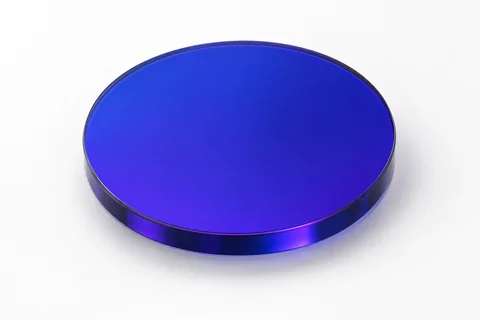
Laser Line Filters
View product →Explore Related Resources
Tell us what you are sourcing.
A product name, a specification or an application is a starting point.