

Sapphire Protective Windows
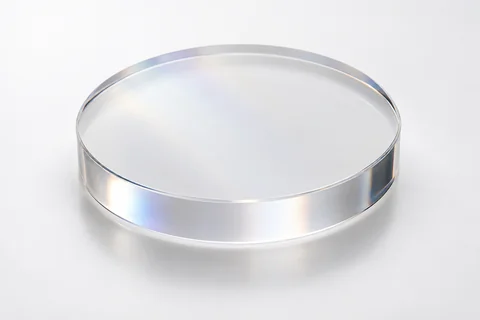
A sapphire window specifically positioned for device-mounted protective use, where scratch resistance and durability matter as much as optical transmission.
Share requirements, quantities and a drawing if available. Specifications and supply terms require confirmation.
Overview
Sapphire protective windows use the same extremely hard, broadband-transmitting sapphire material covered on Dongqiao's Sapphire Optical Windows page, but this page is framed specifically around the device-mounted protective-cover buying decision — sensor covers, instrument port windows and equipment protection covers — rather than the general optical-window buying decision. Buyers here are typically selecting a protective cover component for an existing device design, not sourcing a general optical element. Procurement review should center on protecting a camera, sensor or instrument face with sapphire while preserving the optical aperture.
Key Selection Points
- Extremely hard, scratch- and abrasion-resistant material well suited to device-mounted protective covers
- Broadband transmission from UV through visible into the mid-IR
- Chemically inert and stable in most industrial environments
Applications
Sapphire protective windows are used as device-mounted protective covers over sensors, instrument ports and equipment viewing windows where durability against scratching and impact is the primary buying driver, alongside broadband optical transmission.
Wavelength Range & Material Guide
This module connects wavelength needs with material choice while keeping reference properties separate from configuration-specific performance. For Sapphire Protective Windows, the module focuses on protecting a camera, sensor or instrument face with sapphire while preserving the optical aperture.
- Separate general material behavior from the exact grade and coating offered for the RFQ.
- Review environmental, thermal and handling constraints alongside the wavelength band.
- Confirm any numerical transmission range for the selected material, coating and configuration.
- Product-specific review: connect spectral band with clear aperture and edge geometry and document the trade-off against a general sapphire window.
Prepare a product-specific enquiry
Include the requirements you know and identify any points that need confirmation.
| RFQ input | What to provide |
|---|---|
| Input 1 | System context: explain why Sapphire Protective Windows is being considered for protecting a camera, sensor or instrument face with sapphire while preserving the optical aperture. |
| Input 2 | Required optical definition: spectral band, then impact or abrasion context. |
| Input 3 | Required physical definition: clear aperture and edge geometry, then coating, sealing and mount. |
| Input 4 | Product distinction to record: state what is being protected, exposure conditions and whether imaging passes through the window. |
| Input 5 | Provide the required quantity and program phase. |
| Input 6 | List the applicable drawing, test reference and acceptance basis. |
Frequently Asked Questions
How is this different from your Sapphire Optical Windows page?
Same material and hardness properties — this page is framed around the device-mounted protective-cover use case (sensor covers, instrument port windows) rather than general optical-window sourcing. If you are choosing between the two, tell us your application and we will point you to the right fit.
Can you match my exact device cutout dimensions?
Sapphire Protective Windows requires this decision to be tied to spectral band and impact or abrasion context. Share your drawing or exact dimensions through the RFQ form and we will confirm feasibility.
Which specification should be fixed first for Sapphire Protective Windows?
Begin with spectral band. It determines how impact or abrasion context and clear aperture and edge geometry should be evaluated before the mechanical details are finalized.
When is Sapphire Protective Windows a better fit than a general sapphire window?
Choose between them by testing the requirement for protecting a camera, sensor or instrument face with sapphire while preserving the optical aperture. If that requirement is absent, the comparison product may provide a simpler procurement path.
What should an RFQ for Sapphire Protective Windows include?
State what is being protected, exposure conditions and whether imaging passes through the window. Also include quantity, drawing revision and the required acceptance evidence. Final availability is confirmed during quotation.
Related Products & Resources

Explore Related Resources
Tell us what you are sourcing.
A product name, a specification or an application is a starting point.