LiDAR Optical Windows & Domes
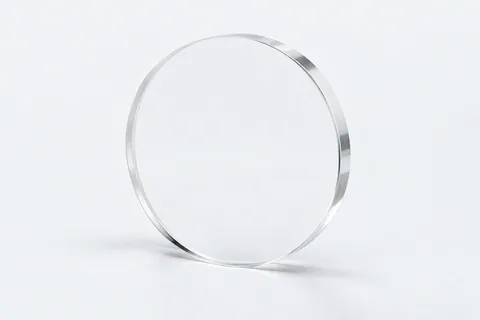
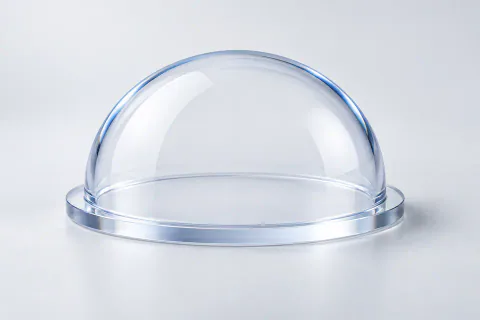
Flat and curved (dome) optical windows used to protect LiDAR sensor housings while preserving beam transmission.
Share requirements, quantities and a drawing if available. Specifications and supply terms require confirmation.
Overview
LiDAR systems require a protective window or dome in front of the emitting/receiving optics that transmits the sensor's operating wavelength while shielding the internal components from environmental exposure. Both flat-window and curved-dome geometries are used depending on the housing design and field-of-view requirement — this page covers both forms rather than splitting them into separate pages, since the underlying buyer decision (sensor protection optic for a LiDAR housing) is the same. Procurement review should center on protecting a LiDAR transmitter or receiver without introducing unacceptable beam deviation or field-of-view loss.
Key Selection Points
- Available in flat window or curved dome geometry depending on housing/field-of-view needs
- Sits in the same general sensor-protection-optics category as Dongqiao's existing Sapphire Domes and Infrared Optical Domes pages
Applications
LiDAR windows and domes are used to protect the emitting/receiving optics in automotive, robotics, industrial and mapping LiDAR sensor housings from environmental exposure while maintaining transmission at the sensor's operating wavelength.
Structure & Configuration
This module describes the physical configuration and interfaces that distinguish the product from a generic optic. For LiDAR Optical Windows & Domes, the module focuses on protecting a LiDAR transmitter or receiver without introducing unacceptable beam deviation or field-of-view loss.
- Use a labeled cross-section or configuration drawing with clear datums.
- Separate optical clear zones from mounting, sealing and handling surfaces.
- Include dimensional and inspection requirements with the enquiry for feasibility review.
- Product-specific review: connect LiDAR wavelength with window or dome geometry and document the trade-off against a generic sensor cover window.
Prepare a product-specific enquiry
Include the requirements you know and identify any points that need confirmation.
| RFQ input | What to provide |
|---|---|
| Input 1 | System context: explain why LiDAR Optical Windows & Domes is being considered for protecting a LiDAR transmitter or receiver without introducing unacceptable beam deviation or field-of-view loss. |
| Input 2 | Required optical definition: LiDAR wavelength, then transmit or receive path. |
| Input 3 | Required physical definition: window or dome geometry, then AOI, coating and environmental load. |
| Input 4 | Product distinction to record: state wavelength, Tx/Rx role, field of view, beam steering range and installation environment. |
| Input 5 | Provide the required quantity and program phase. |
| Input 6 | List the applicable drawing, test reference and acceptance basis. |
Frequently Asked Questions
Should I choose a flat window or a dome?
This depends on your housing design and required field of view — a dome generally preserves a wider field of view than a flat window. Tell us your housing geometry and we will help confirm the right form.
Can you match my exact housing dimensions?
Share your drawing or housing dimensions through the RFQ form and we will confirm feasibility.
Which specification should be fixed first for LiDAR Optical Windows & Domes?
Begin with LiDAR wavelength. It determines how transmit or receive path and window or dome geometry should be evaluated before the mechanical details are finalized.
When is LiDAR Optical Windows & Domes a better fit than a generic sensor cover window?
Choose between them by testing the requirement for protecting a LiDAR transmitter or receiver without introducing unacceptable beam deviation or field-of-view loss. If that requirement is absent, the comparison product may provide a simpler procurement path.
What should an RFQ for LiDAR Optical Windows & Domes include?
State wavelength, Tx/Rx role, field of view, beam steering range and installation environment. Also include quantity, drawing revision and the required acceptance evidence. Final availability is confirmed during quotation.
Related Products & Resources
Explore Related Resources
Tell us what you are sourcing.
A product name, a specification or an application is a starting point.